Urinalysis Results Entry
Description, Purpose and Objective
NOTE
The Urinalysis Results Entry console is the specialized interface designed to collect and record in a structured way the physical, chemical and microscopic analyzes of urine samples (partial urine and sediment) within the framework of external quality evaluation programs (PEEC).
The purpose of this module is to channel the results of the participants through parameterized dynamic questionnaires. Its objective is to standardize and validate the capture of the different components of the urine sample, organizing the fields into sequential thematic sections that use drop-down menus (Dropdowns) with qualitative, quantitative, semi-quantitative or binary qualification options, thus guaranteeing the consistency of the reported data.
Context of Use
This panel is operated in the laboratory routine by:
- Bacteriologists and Urinalysis Technicians: To record organoleptic, chemical and instrumental measurements of samples from the assigned PEEC program.
- Quality Coordinators: To review and audit the biological and clinical correlation between the physical-chemical report and the findings of the urinary sediment in the microscope.
Sections of the Dynamic Capture Questionnaire
The form is organized into four consecutive sections:

1. Physical Analysis
Section dedicated to the organoleptic evaluation of the specimen through single selection lists:
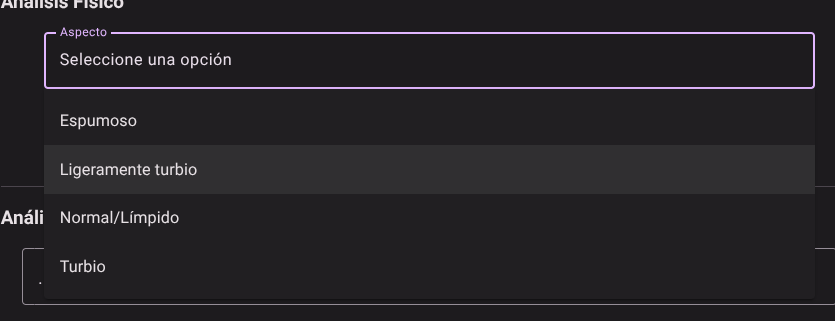
- Appearance: Selection of the transparency or turbidity of the urine sample.
- Examples of options:
Normal/Límpido,Ligeramente turbio,Turbio,Espumoso.
- Examples of options:
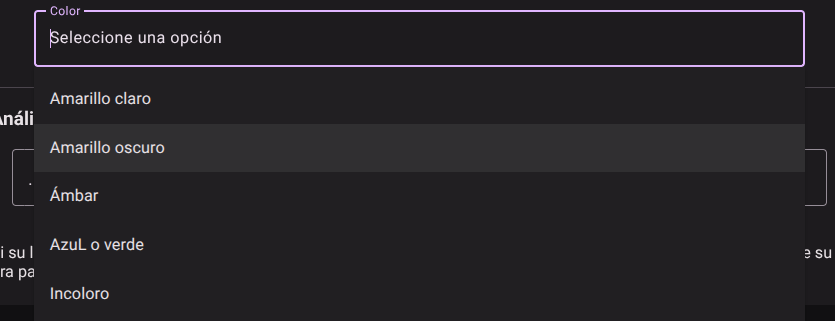
- Color: Selection of the shade and visible pigmentation of the sample.
- Examples of options:
Amarillo claro,Amarillo oscuro,Ámbar,Incoloro,Naranja,Rojo,
- Examples of options:

2. Biochemical Analysis (Reagent Strip / Automated)
Section for recording the chemical behavior of urine using test strips.
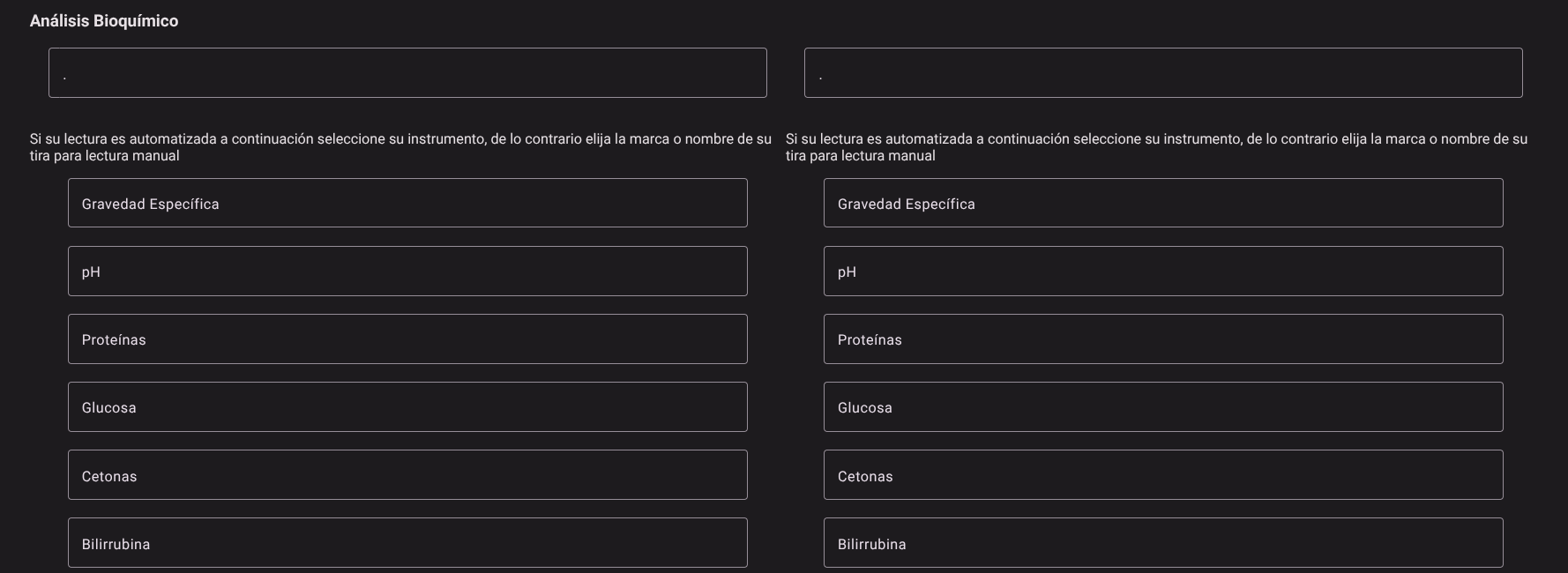
- Technical Configuration (Equipment/Strip): Initial mandatory drop-down to define the manufacturer or model of the analyzer or chemical reading strips.
- Examples of options:
Acon/Insight strips,Arkray Aution Sticks,Analyticon Biotechnologies.
- Examples of options:
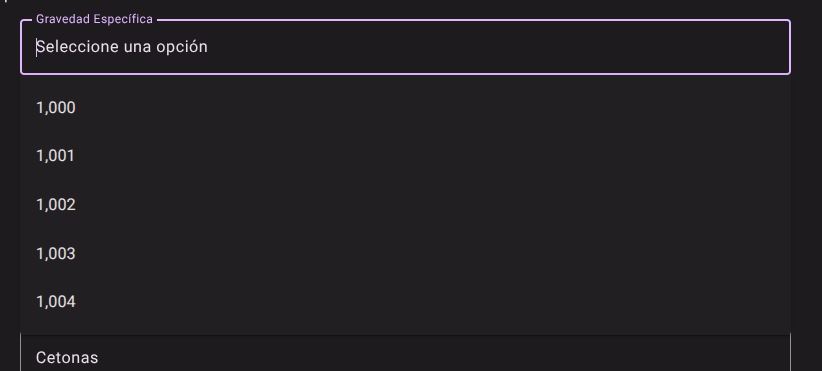
- Specific Gravity (Density): Discrete numerical options that measure the concentration of solutes in urine.
- Examples of options:
1.000,1.005,1.010,1.015,1.020,
- Examples of options:
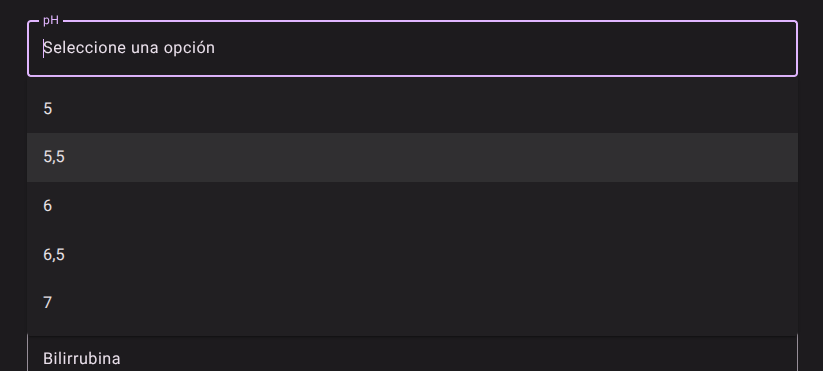
- pH: Selection of the absolute level of acidity or alkalinity of the specimen.
- Examples of options:
5.0,5.5,6.0,6.5,7.0,
- Examples of options:
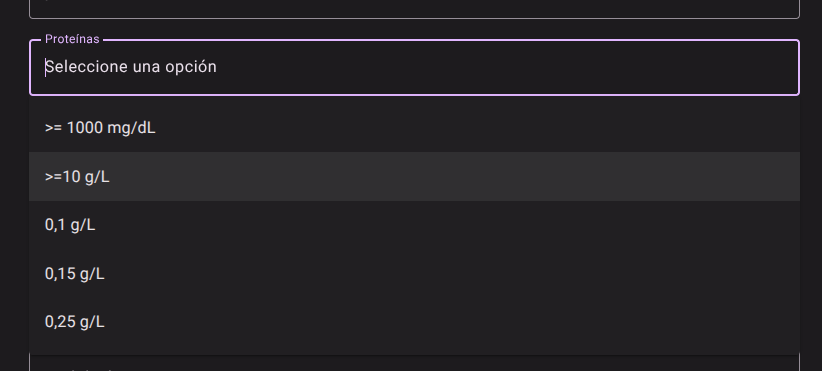
- Proteins / Glucose: Semi-quantitative scale of protein and sugar concentration.
- Examples of options:
Negativo,0.1 g/L,0.3 g/L/Negativo,>= 1000 mg/dL,
- Examples of options:
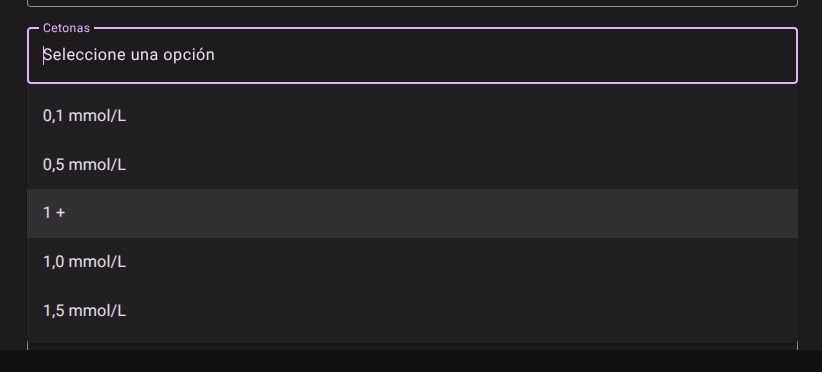
- Ketones / Bilirubin / Urobilinogen / Hemoglobin / Leukocyte Esterase: Semiquantitative results represented by crosses, mass concentrations or volumetric intervals.
- Examples of options:
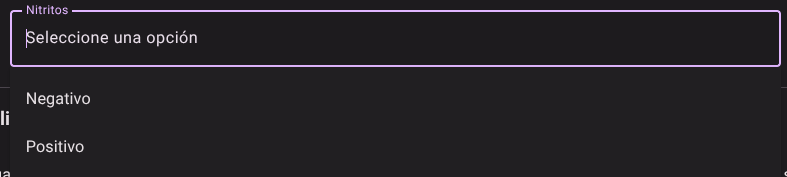
1+,0.1 mmol/L,0.2 mg/dL,10-25 Leu/uL. - Nitrites: Qualitative selection of reducing bacterial presence.
- Examples of options:
Negativo,Positivo.
- Examples of options:
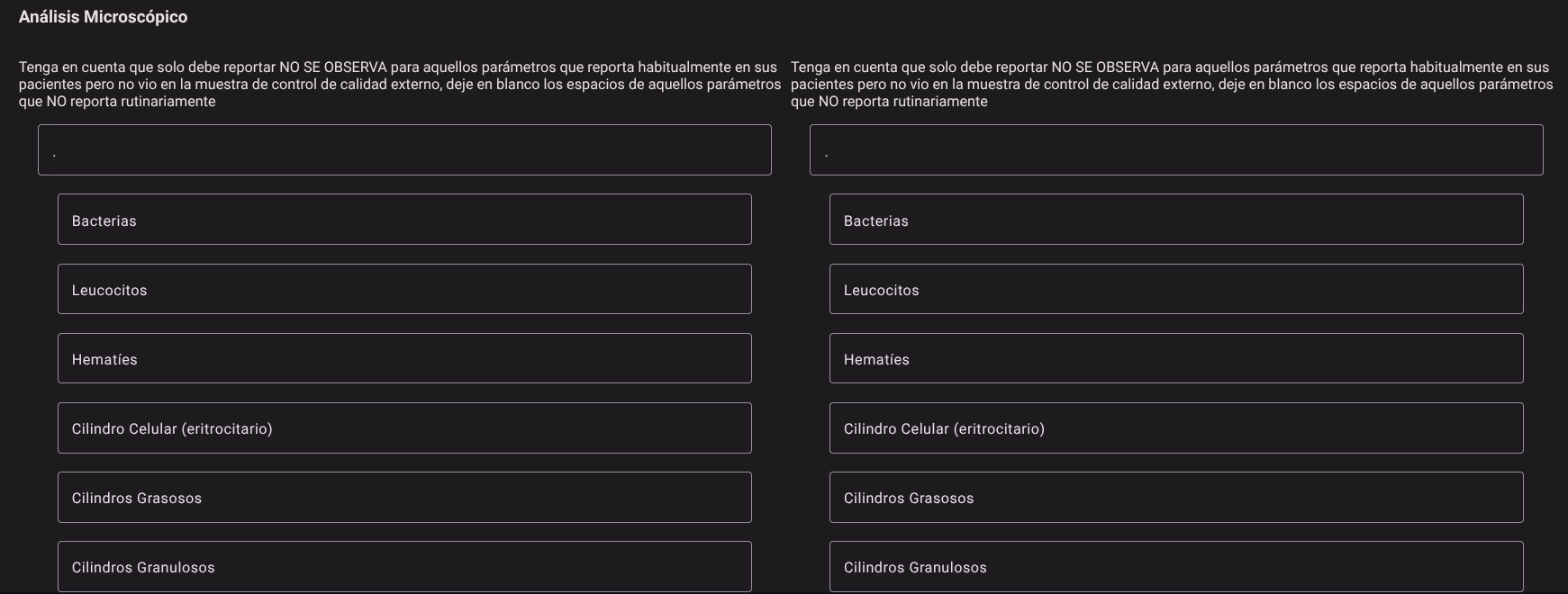
3. Microscopic Analysis (Urinary Sediment)
Section intended for the reporting of insoluble structures in the urine sediment after centrifugation.
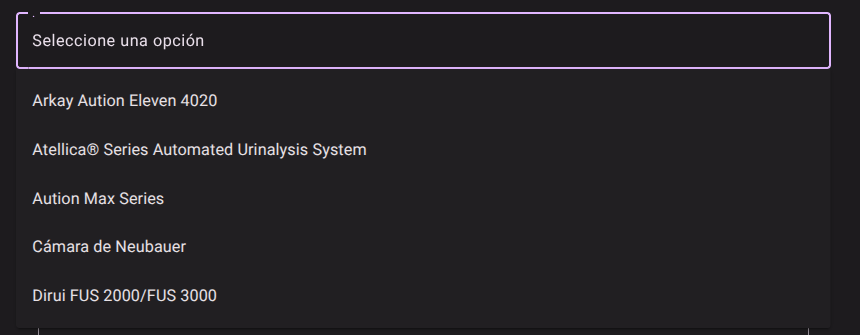
- Method / Equipment: Selection of the sediment counting system or method.
- Examples of options:
Cámara de Neubauer,Arkray Aution Eleven,Sysmex,Atellica Series.
- Examples of options:
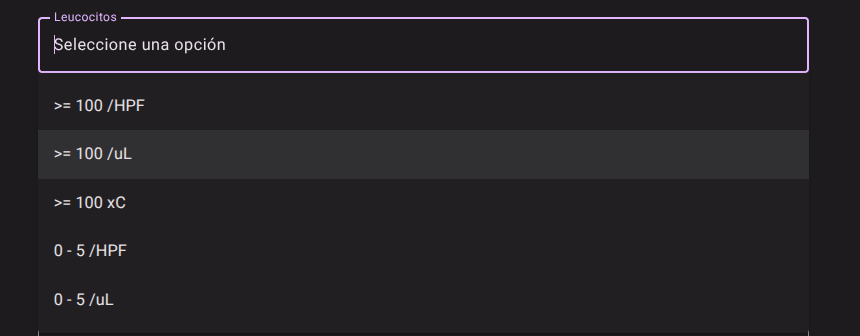
- Cellular Elements and Bacteria: Drop-down menus for counting epithelial cells, leukocytes, red blood cells and bacteria, either by numerical range per high power field (HPF) or qualitative scale of crosses.
- Examples of options:
0-5 /HPF,>= 100 /uL,1+,2+,3+,
- Examples of options:
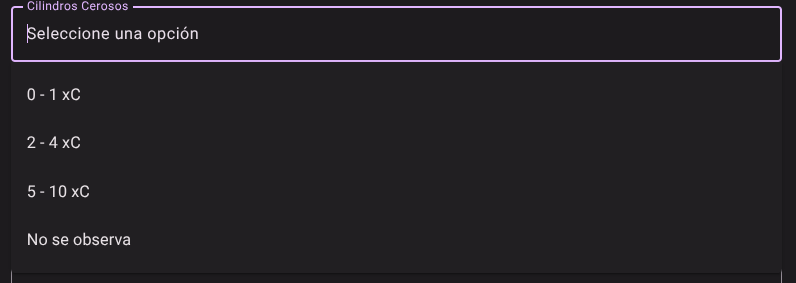
- Cylinders and Crystals: Abundance display for cylinders (Hyaline, Granular, Waxy or Cellular) and crystals of clinical significance (Calcium Oxalate, Uric Acid or Urates).
- Examples of options:
No se observa,0-1 xC,2-4 xC,5-10 xC,1+to
- Examples of options:
- Artifacts and Biologicals: Options to report mucus, yeast/fungi and parasites.
- Examples of options:
Ausente,Presente,Escasas.
- Examples of options:

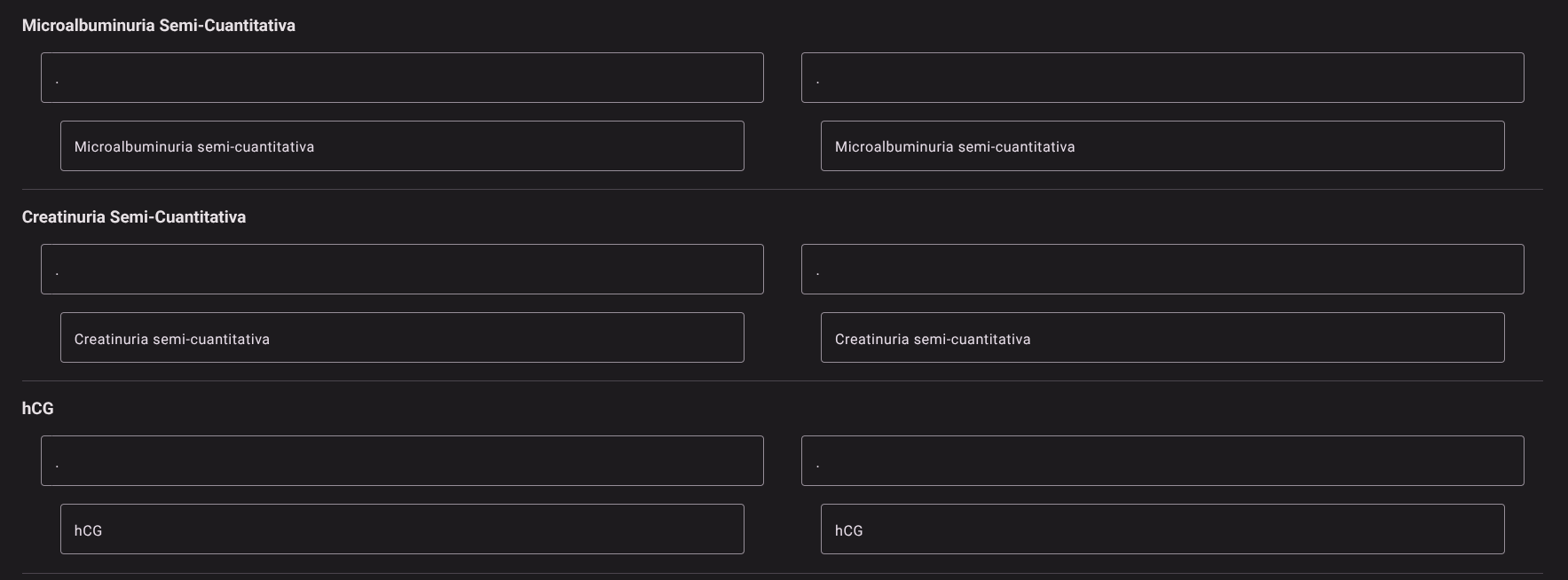
4. Special and Semiquantitative Tests (Microalbuminuria, Creatinuria, hCG)
Complementary module for reports of special determinations in urine:
- Reagent Selection: Menu to select the manufacturer of the rapid test or reagent.
- Examples of options:
Abon,Acon/Insight,Beckman Coulter ICON,BTS 350.
- Examples of options:
- Results: Quantitative cut-off ranges or binary qualitative readings.
- Examples of options:
10 mg/L,30 mg/L,100 mg/L,Positivo/Negativo.
- Examples of options:
5. Final Save
- After completing the necessary spaces, you only need to click the Save button at the end of the form at the bottom right
Clinical-Pathological Correlation and Quality Control in Urinalysis
TIP
Critical Verification Points for the Bacteriologist:
- Physical-Chemical Correlation vs. Microscopic: Before sending, audit the internal consistency of the report:
- If the Hemoglobin / Occult Blood pad is clearly positive but no erythrocytes are observed in the sediment, consider hematuria with osmolar lysis (density $< 1.010$ o $pH > 7.5$) or presence of myoglobin.
- If the Leukocyte Esterase reaction is positive, it must necessarily be correlated with the presence of leukocytes (pyocytes) in the microscopic sediment.
- A Positive Nitrite reaction requires microscopic evaluation of significant bacteriuria, remembering that gram-positive bacteria and certain species (such as Enterococcus faecalis) do not reduce nitrates to nitrites.
- Sediment Standardization: Using traditional optical microscopy, verify that the sediment concentration meets the standard ratio of $12\text{ mL}$ of urine centrifuged at $400 \times g$ for 5 minutes and decanted to $0.5 - 1.0\text{ mL}$.
Roles and Permissions Required
Access and registration of data in the Urinalysis module is conditioned by the following system permissions and roles:
The profiles enabled to operate this interface are the Bacteriologist / Urinalysis Analyst and the Quality Director.
- Access and Viewing:
urinalysis_read: Allows entry to the/laboratory/urinalysisconsole and viewing the form sections.
- Capture and Insertion:
urinalysis_create/urinalysis_update: Authorize the filling out of the drop-down menus (physical, chemical and microscopic) and enable the saving of the participant's data on the server.
- Elimination:
urinalysis_delete: Allows you to cancel or clear the participant's results form to restart their typing.